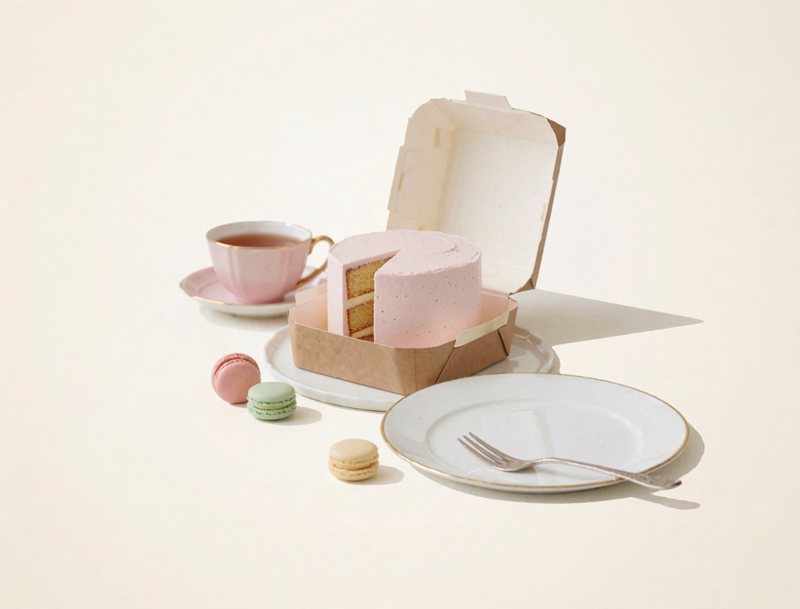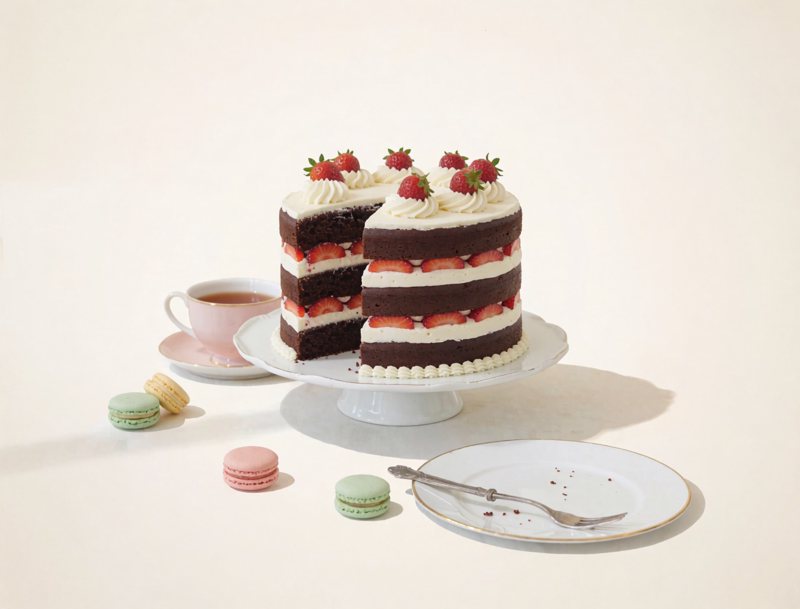
A crumb coat is a thin first layer, here about 0.5 cm, that glues loose crumbs to the cake and levels the sides before the final finish. It needs to be firm enough to spread without dragging crumbs and thin enough not to add bulk. The usual failure is a runny cream cheese frosting. The cause is almost never a missing ingredient. It is over-whipping: beating breaks the structure of the cheese and releases its whey.
Ingredients and what each one does
- Full-fat cream cheese is the body. Its fat and milk proteins set firm when cold. Low-fat or spreadable tub versions contain more water and stabilisers, so they loosen sooner. Use a firm, full-fat one. An inexpensive brand works fine as long as it is full-fat and firm.
- Double cream (about 33–35% fat) adds lightness. Its fat globules trap air when whipped and stiffen the mixture. As a general rule, cream below roughly 30% fat will not hold.
How to make it
- Keep both ingredients and the bowl cold, straight from the fridge (about 4–6 °C). Warm fat softens, and a soft frosting cannot be rescued by whipping.
- Beat the cream cheese alone on low speed just until smooth. Mechanism: the cheese needs loosening, but every extra turn of the whisk damages its structure. Sign: no lumps, glossy, still thick. About 20–30 seconds.
- Pour in the cream in a thin stream while mixing on low to medium. Mechanism: the cheese is already stable, so the cream can be incorporated without whipping it hard. Sign: the mixture thickens and holds a soft peak that bends at the tip. Stop there. This usually takes 30–90 seconds, but the exact time depends on your mixer and bowl, so go by the sign.
- If it feels soft, chill the bowl for 15–30 minutes and stir gently. This is our estimate, so try and weigh. A cold bowl is a cheaper fix than more whipping.
- Apply to a fully cooled, chilled cake. Cold cake and cold frosting avoid condensation, which turns the surface wet. Spread a thin layer and scrape the sides. Sign: no bare sponge or visible crumbs. Then chill until firm to the touch, usually 20–40 minutes, before the final coat.
A common myth is that cream cheese frosting always needs a lot of icing sugar to hold. It doesn’t. Sugar only masks the problem, and it draws water and loosens the texture. If it is runny, the cause is warmth or over-whipping. We leave sweetness to your taste; this layer is deliberately lightly tangy against the sponge.
What can go wrong
- Runny and slack. Over-whipped, warm ingredients or a low-fat cheese. Chill and stir gently. If it stays loose, start again with fresh cold cheese, because adding thickener treats the symptom rather than the cause.
- Lumps. The cheese was not smoothed first, or the cream went in too fast. Smooth the cheese before adding anything.
- Grainy or curdled. The cream was over-whipped and its fat clumped. This is a general rule for all whipped cream and it cannot be undone.
- Crumbs dragging through. The cake is warm or crumbly, or you are dipping the spatula back into the bowl. Chill the cake and take a fresh portion each time.
Substitutions
Mascarpone instead of cream cheese gives a milder, softer, richer frosting, so chill longer. Whipping cream at 33–35% fat can stand in for double cream. Anything lighter produces a looser coat.
Storage
Covered in the fridge for up to about 2 days. If it has firmed up, stir gently rather than re-whipping. A coated cake keeps in the fridge until you apply the final layer.