
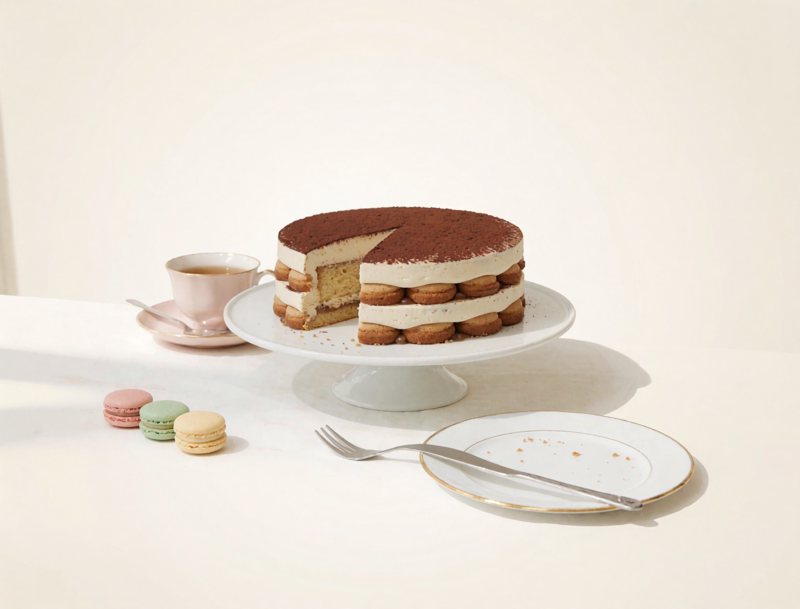
Golden tiramisu is the classic ladyfinger, coffee and mascarpone dessert with a layer of salted caramel added between the cream and the biscuits. The usual failures are a mushy bottom, grainy cream and caramel that bleeds into everything. The first comes from soaking the biscuits too long, the second from over-beaten mascarpone, and the third from caramel that was too warm or too thin.
What it is made of
Top to bottom:
- Mascarpone cream ×2 · 1.5 cm
The top layer: light, cold and smooth
- Salted caramel ×2 · 0.3 cm
A thin layer that cuts the sweetness and adds a bitter-salty note
- Coffee-soaked ladyfingers ×2 · 1.5 cm
The “cake”: dry, porous biscuits that hold the coffee
Caramel is mostly sugar syrup and fat, while the cream is mostly fat and air. Keeping them as separate layers works because both are thick enough not to mix at once. Over the night in the fridge they will merge a little at the border anyway, and that is normal.
Order of work
A day ahead: caramel. Melt sugar dry until it turns amber, because sugar only turns into caramel flavour once it has coloured. The sign: the colour of dark amber and a smell that has moved from sweet to nutty, just before bitter. Take it off the heat then (usually 4 to 8 minutes). Pour in warm cream, not cold, because cold cream makes the caramel seize and spatter violently. Add butter for softness and gloss. Add salt last and taste it. How salty is a matter of taste, so try and weigh. Cool it to room temperature. The sign: it falls from a spoon in a slow, thick ribbon. Warm caramel soaks the biscuits and melts the cream. Fridge-cold caramel is stiff and tears them.
Coffee: brew it strong and let it cool to room temperature. Hot coffee collapses the biscuits.
Cream: mascarpone and cream must be cold. Whip the cream to soft peaks, because the mascarpone will thicken it further when mixed. Loosen the mascarpone with a spatula until smooth and do not beat it long with a mixer: the fat separates and the cream turns grainy and buttery. Fold the two together from the bottom up. If you use egg yolks, whisk them with sugar over a water bath to about 70 °C and cool them, or use pasteurised eggs. This is a general food-safety rule, not a matter of taste.
Assembly (a Ø 20 cm tin lined with film, or a ring):
- Dip each ladyfinger in the coffee for 1 to 2 seconds per side. The sign: it no longer crunches but still holds its shape and is dry in the centre.
- Lay them tightly, trimming to fit the edges.
- Spread a thin layer of caramel, a few millimetres. This is our estimate, so try and weigh. Leave a rim around the edge free.
- Pipe or spread the cream over it, including the rim. The cream rim keeps the caramel from running out of the sides.
- Repeat: biscuits, caramel, cream. Smooth the top.
Resting: 6 to 12 hours in the fridge, with film not touching the top. The cold sets the cream, and the moisture evens out between biscuit and cream. A clean slice comes only from a cold cake, cut with a knife wiped between cuts.
For the top, a few flakes of salt and a thin drizzle of caramel just before serving look good. Cocoa on a damp surface soaks in and darkens in patches.
What can go wrong
- Mushy bottom. The biscuits were soaked too long, or the coffee was warm.
- Caramel leaks out of the slices. It was too thin or too warm, or there was no cream dam at the edge.
- Grainy cream. The mascarpone was over-beaten or mixed with warm ingredients.
- Hard caramel layer that tears the biscuits. It went in cold from the fridge. Bring it to room temperature first.
The verdict
This tiramisu is decided by seconds in the coffee, a cool caramel of the right thickness, and a cold cream that was not over-beaten.