
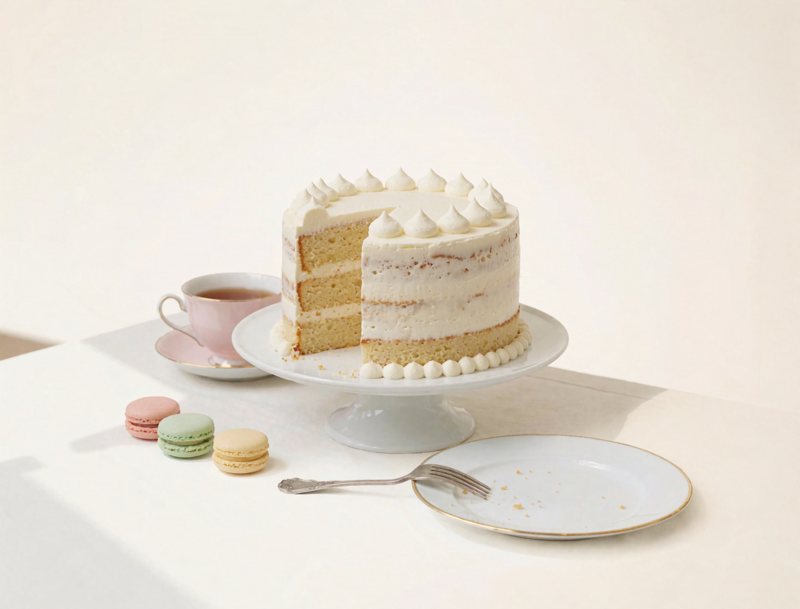
This cream is a white chocolate ganache that is chilled, then whipped into a light, pipeable filling with coconut in it. It holds layers, tastes of coconut and vanilla-sweet chocolate, and is firm enough to pipe a dam around a softer filling. The most common failure is whipping it too soon or too far. It turns grainy and buttery, and the real cause is almost always temperature or whipping past the point where it holds.
Ingredients and what each one does
- White chocolate supplies cocoa butter, which crystallises as the ganache cools and gives the cream its structure. Use real white chocolate that lists cocoa butter. Compound “white coating” made with other fats sets differently and whips unpredictably.
- Double cream brings fat for the emulsion and water for the melt. General rule: cream below about 30% fat will not hold a ganache or whip properly, so don’t go lighter.
- Desiccated coconut gives flavour and texture. It is dry and slowly absorbs water from the cream, so the cream thickens a little after assembly.
The ratio of chocolate to cream is in the ingredient table. More chocolate gives a firmer cream that whips less airily, and more cream gives a softer, lighter one. Where exactly you land is a matter of taste, so try and weigh.
How to make it
- Heat the cream until steaming, about 80 °C, and take it off the heat. White chocolate scorches and splits more easily than dark, so it should not boil. Sign: steam and small bubbles at the edge, but no rolling boil.
- Add the chopped white chocolate and leave it for 1 to 2 minutes. The heat of the cream melts the cocoa butter without you stirring too early and cooling the surface. Sign: the pieces look soft and glossy on the outside.
- Stir slowly from the centre outwards. The fat and water form an emulsion as you stir. Sign: a smooth, shiny mass with no lumps and no oily streaks.
- Cover with film in contact with the surface and chill overnight, about 8 to 12 hours at fridge temperature. The cocoa butter needs time to crystallise fully, and that network is what holds the air when whipped. A few hours often works too, but the cream will be less stable. Try and weigh.
- Whip the cold ganache, straight from the fridge, with a whisk or mixer. Cold fat traps air, and warm fat just smears. Sign: the cream turns pale, thickens and holds soft to medium peaks. Stop there, usually within 1 to 3 minutes.
- Fold in the coconut at the end by hand or on the lowest speed. Prolonged mixing deflates the air. Sign: the coconut is evenly spread and the cream still holds its shape on the spoon.
What can go wrong
- Grainy, buttery, crumbly. It was whipped too far, so the fat globules clumped. Warm it gently until melted, chill it again and whip again, stopping earlier.
- Won’t whip. The ganache is not cold enough, or it contains too much cream. Chill it longer.
- Oily streaks after mixing. The cream was too hot or the chocolate poor quality. Rewarm gently, stir, and chill again.
- Cream too stiff in the cake after a day. The coconut absorbed moisture. Fold in a little more cream when whipping, or use a bit less coconut next time.
Substitutions
Cream with 33 to 35% fat instead of double cream works, but the result is softer. Dark or milk chocolate gives a different cream with less of the Raffaello character. Coconut milk is not a replacement for the cream because its fat behaves differently. A small splash of coconut liqueur can go in at the whipping stage, in small portions, because the water in alcohol can split the cream.
Storage
Keep the unwhipped ganache covered in the fridge for a few days. Once whipped, use it the same day. Assembled in a cake, it keeps in the fridge, and 2 to 3 days is our estimate. If it hardens, stir it briefly rather than re-whipping hard.