
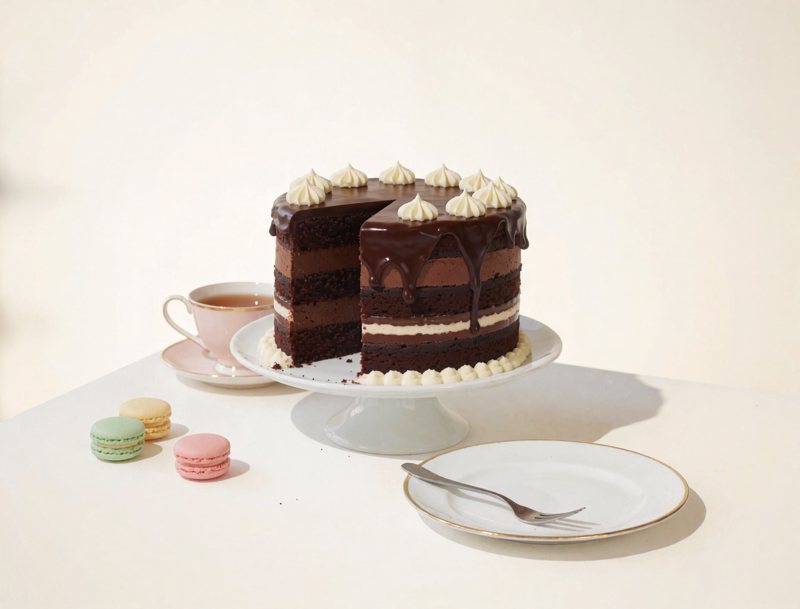
Caramel cream is a soft, sliceable filling: caramel flavour carried by cream cheese and lightened with whipped cream. It holds layers together and adds a bitter-sweet note that cuts through plain sponge. The most common failure is a cream that turns runny and never recovers. The cause is almost always caramel that was still warm when it met the cream cheese.
Ingredients and what each one does
- Caster sugar is the flavour. Heated dry, it breaks down into bitter and aromatic compounds. Caster dissolves and melts more evenly than coarse sugar.
- Full-fat cream cheese is the structure. Its fat and milk solids give body, and its tang balances the sweetness. Low-fat versions hold more water and release it as whey, so the cream goes loose.
- Double cream makes it light. Its high fat content whips to a stable foam. A small part of it is also warmed to loosen the caramel.
How to make it
- Cook the caramel first. Spread the sugar in an even layer in a dry, heavy-bottomed pan over medium heat and leave it alone. Stirring early drags unmelted crystals up the pan wall and can set off crystallisation of the whole batch. Once the edges melt, swirl the pan gently.
- Cook to a deep amber, roughly 170 to 180 °C. Sign: the smell changes from sweet to toasty caramel. Paler caramel tastes flat, and darker turns bitter. This takes about 5 to 10 minutes.
- Warm a small part of the double cream, about a quarter to a third of the total (our estimate, try and weigh). Pour it into the caramel in a thin stream off the heat. Cold cream on hot sugar boils violently and seizes into lumps. Sign: a smooth, glossy, pourable caramel.
- Cool the caramel fully, to room temperature or just below, about 20 to 25 °C. Cream cheese fat softens at body temperature, so warm caramel melts it. This is the step that decides the result. Sign: a drop on your wrist feels cool, and the caramel is thick but still flows. Allow 30 to 60 minutes, stirring now and then.
- Beat the cold cream cheese briefly to loosen it, then add the cooled caramel. Beat until the colour is even and no streaks remain, about 30 seconds. Longer beating thins cream cheese.
- Whip the rest of the cold double cream to soft peaks, then fold it in by hand in two additions. Overwhipped cream turns grainy and buttery, and it cannot be saved by mixing. Sign: the mass holds a soft peak and looks smooth, not curdled.
What can go wrong
- Runny cream. The caramel was too warm, the cream cheese was low-fat, or the mixture was beaten too long. Chill it for 30 to 60 minutes and fold it gently. Do not add more sugar or starch to thicken it.
- Hard caramel lumps. The caramel was cooled in the fridge or freezer until stiff, or cold cream hit it directly. Cool it at room temperature, and if lumps form, warm the caramel slightly and sieve it.
- Grainy texture. Sugar crystals from the pan wall, or overwhipped cream. Keep the pan wall clean and stop whipping at soft peaks.
- Bitter taste. The sugar went past amber. This cannot be fixed, so start again.
Substitutions
- Mascarpone instead of cream cheese gives a softer, richer, less tangy cream. It is also more fragile, so beat it very briefly.
- Whipping cream (about 35%) instead of double cream works but gives a softer foam that holds less. Use a thinner layer and keep the cake colder.
Storage
Keep it covered in the fridge for up to about 2 days. If it has stiffened, stir gently to loosen it; do not whip it again. Make it just before assembly so the layer stays at its 1 cm height.