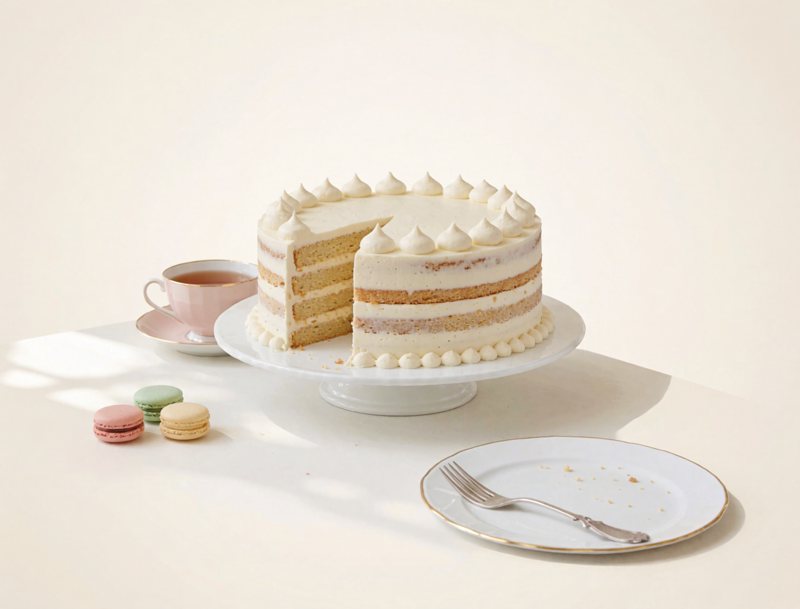
Esterházy is a Hungarian cake of nut meringue layers and buttercream. The usual failures are sticky, chewy layers and a buttercream that splits. The first comes from undissolved sugar and under-dried meringue, the second from butter and base at different temperatures.
What it is made of
Top to bottom:
- Swiss meringue buttercream ×4 · 1.0 cm
The coating
- Almond dacquoise ×4 · 1.2 cm
Four almond layers and four layers of cream.
An honest note on how this differs from the Hungarian original. The classic cream is custard-based (butter beaten into a cooked base), flavoured with vanilla, cognac or kirsch, and the top is finished with white glaze and a chocolate feathered pattern. This version uses Swiss meringue buttercream and has no pattern. Swiss buttercream is lighter, less eggy and more stable.
Order of work
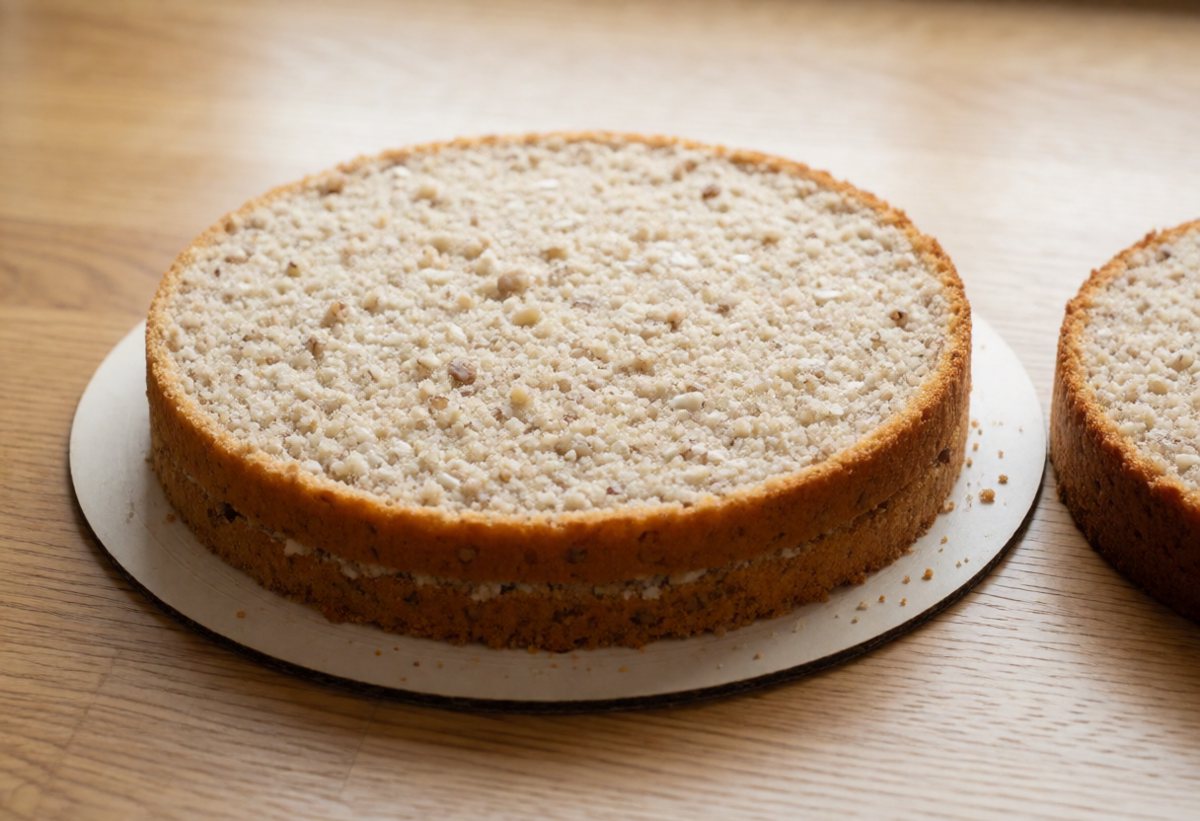
Dacquoise (the day before): whites at room temperature (about 21 °C) in a glass or metal bowl free of grease. Whip with a pinch of salt and add fine sugar in small portions until fully dissolved (rub between your fingers). Mix the almond flour with a little icing sugar and fold it in with a spatula without beating: nut fat knocks the foam down. Spread discs and dry them at low heat, about 130 to 150 °C, until golden and dry. Cool completely.
Swiss buttercream: warm whites and sugar over a water bath until the sugar dissolves, whip to stiff peaks, cool the bowl. Add the butter in pieces. If it curdles, keep whipping; if it is runny, chill the bowl.
Assembly:
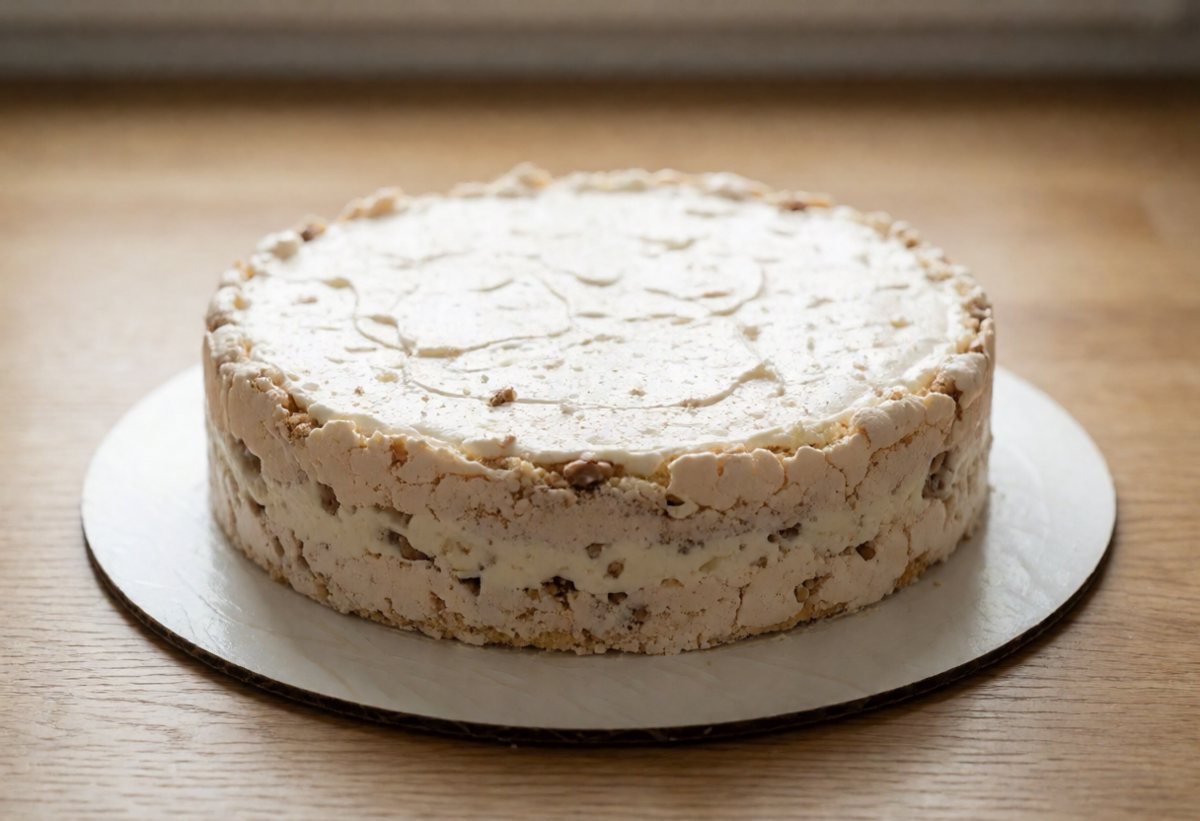
- Layer, an even film of cream 3 to 5 mm, the next layer.
- 20 to 30 minutes in the cold.
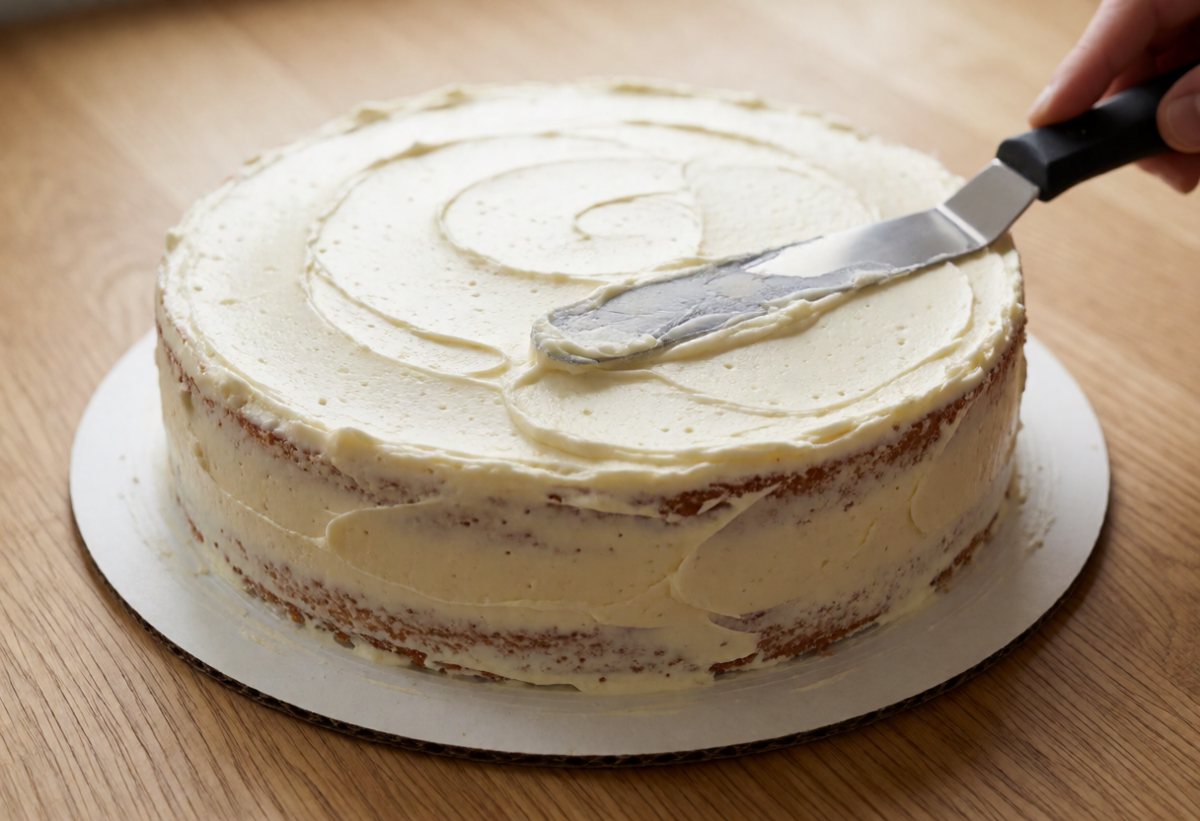
- Coat the sides and top with cream.
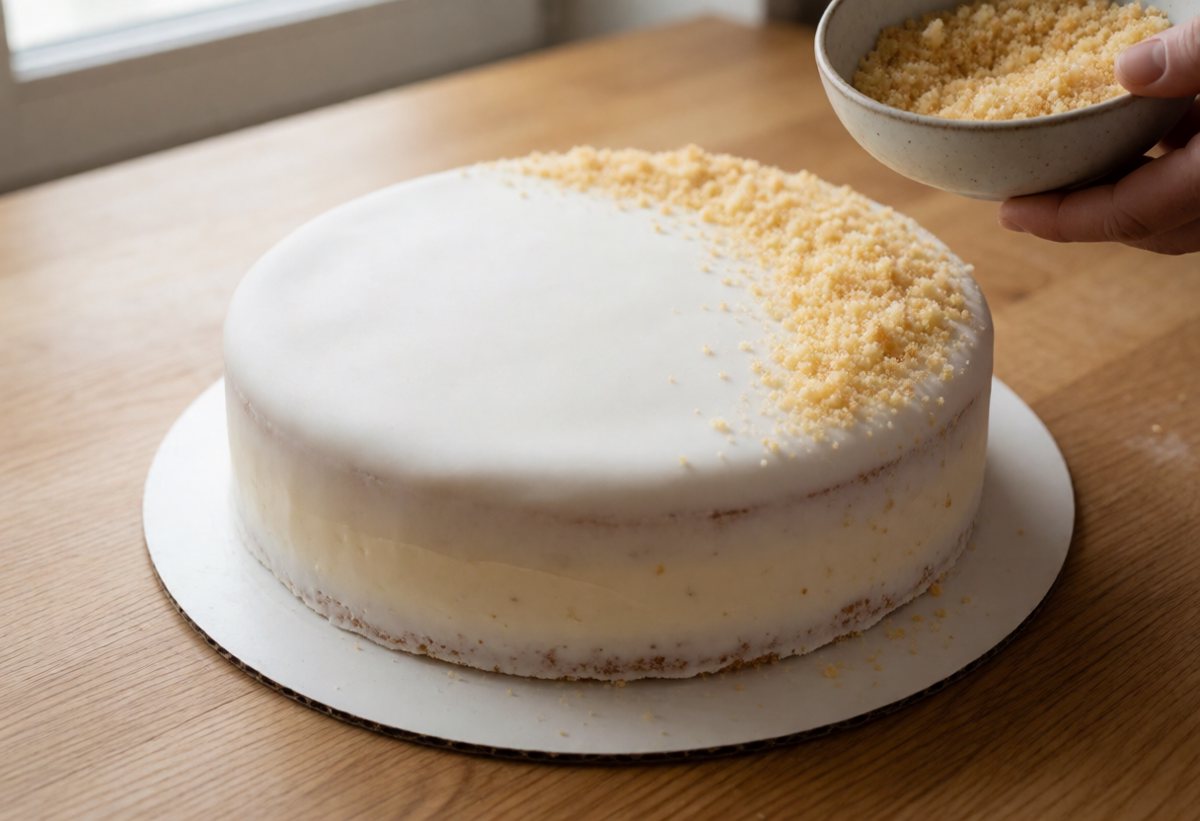
- If you like, sprinkle with crumbs from the trimmings.
Resting: 8 to 12 hours in the cold. The cream moistens the dacquoise and it becomes tender.
What can go wrong
- Sticky layers. Sugar not dissolved, or under-dried.
- Cracked layers. Oven too hot or cooled sharply.
- Split buttercream. Butter and whites at different temperatures.
- The cake slides. Not chilled between layers.
The verdict
In Esterházy the dryness of the almond layers and the temperature of the cream decide it. The night in the fridge does the rest.