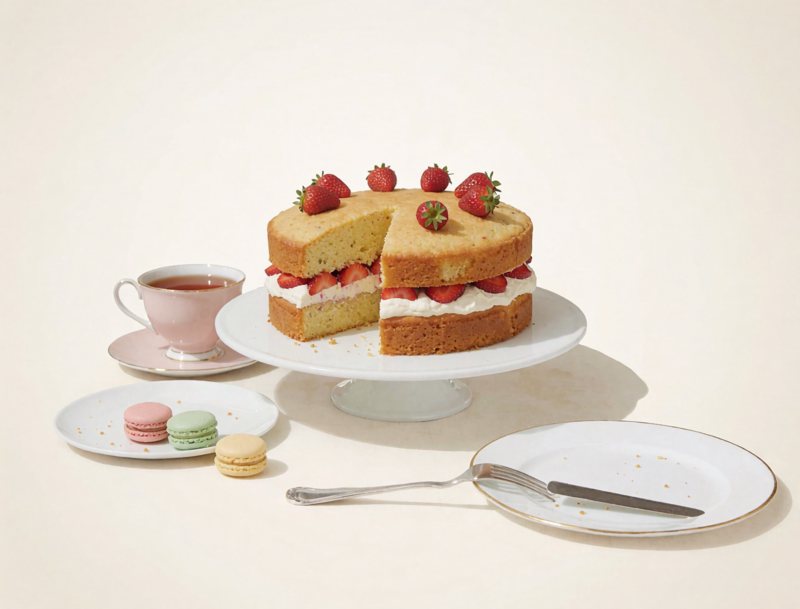
A Victoria sponge is denser and moister than a whisked sponge. Its structure comes from butter creamed with sugar plus eggs, so it needs no soaking and takes the weight of a filling well. The most common mistake is cold eggs: they split the batter and the sponge turns out heavy.
Ingredients and what each one does
- Butter gives flavour, tenderness and the first lift, because creaming traps air in it. The fat also coats the flour and limits gluten, so the crumb stays tender.
- Sugar crystals cut air pockets into the butter, then dissolve.
- Eggs bind everything and add moisture and structure.
- Self-raising flour is the frame plus extra lift. With plain flour, add baking powder yourself.
How to make it
- The butter should be soft but not greasy, around 18–22 °C: a finger leaves a dent with little pressure. Cold butter won’t cream; overly warm butter can’t hold air.
- Beat butter and sugar until pale and fluffy, 4–6 minutes, until the colour clearly lightens. This is where most of the volume is made.
- Add the eggs one at a time, beating each in. Room-temperature eggs matter: cold liquid breaks the butter emulsion and the mix turns grainy. If it does curdle, a spoon of the flour is the usual rescue because it takes up the loose moisture.
- Fold in the flour with a spatula in two or three additions, only until smooth. The batter should be soft and drop reluctantly from the spoon.
- Bake about 25 minutes at 160 °C fan. The lower temperature (compared to a whisked sponge) lets the centre cook before the top over-browns.
- It’s done when a skewer comes out clean and the golden top springs back. Leave it 5–10 minutes in the tin, then cool on a rack.
What can go wrong
- Dense layer. Butter too cold, or the flour was mixed too long.
- Grainy batter after the eggs. Cold eggs, or they went in too fast.
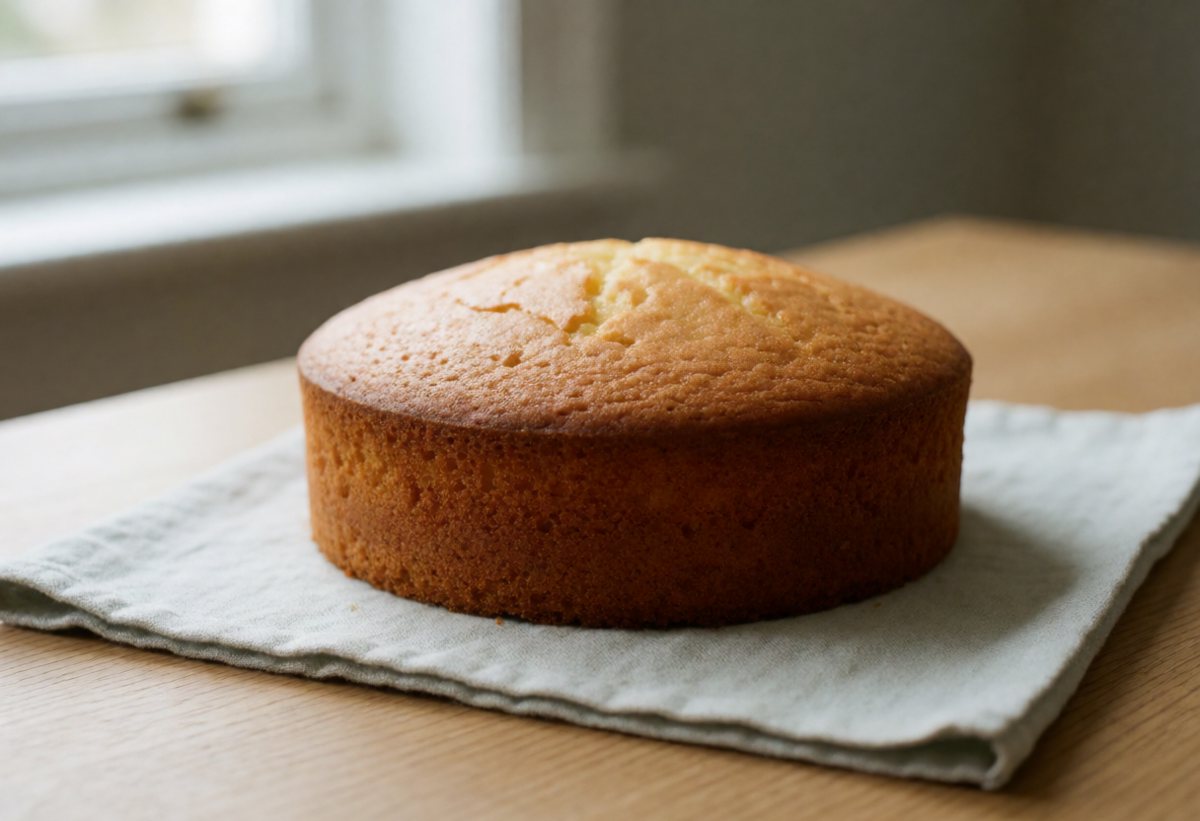
- Dome and crack. Oven too hot: the top set while the centre was still rising.
- Dry. Overbaked. Butter cake loses moisture quickly if left in the oven.
Substitutions
Margarine works instead of butter and is more forgiving, but the flavour is poorer. Use caster (fine) sugar, because coarse crystals don’t dissolve.
Storage
A butter sponge stays moist for a long time: up to 3 days wrapped at room temperature, a month frozen. Chilled layers cut more cleanly.