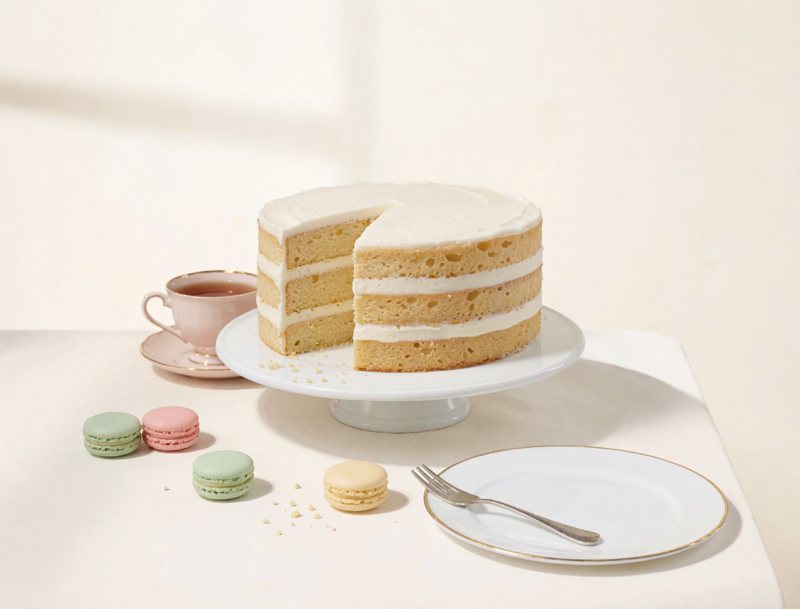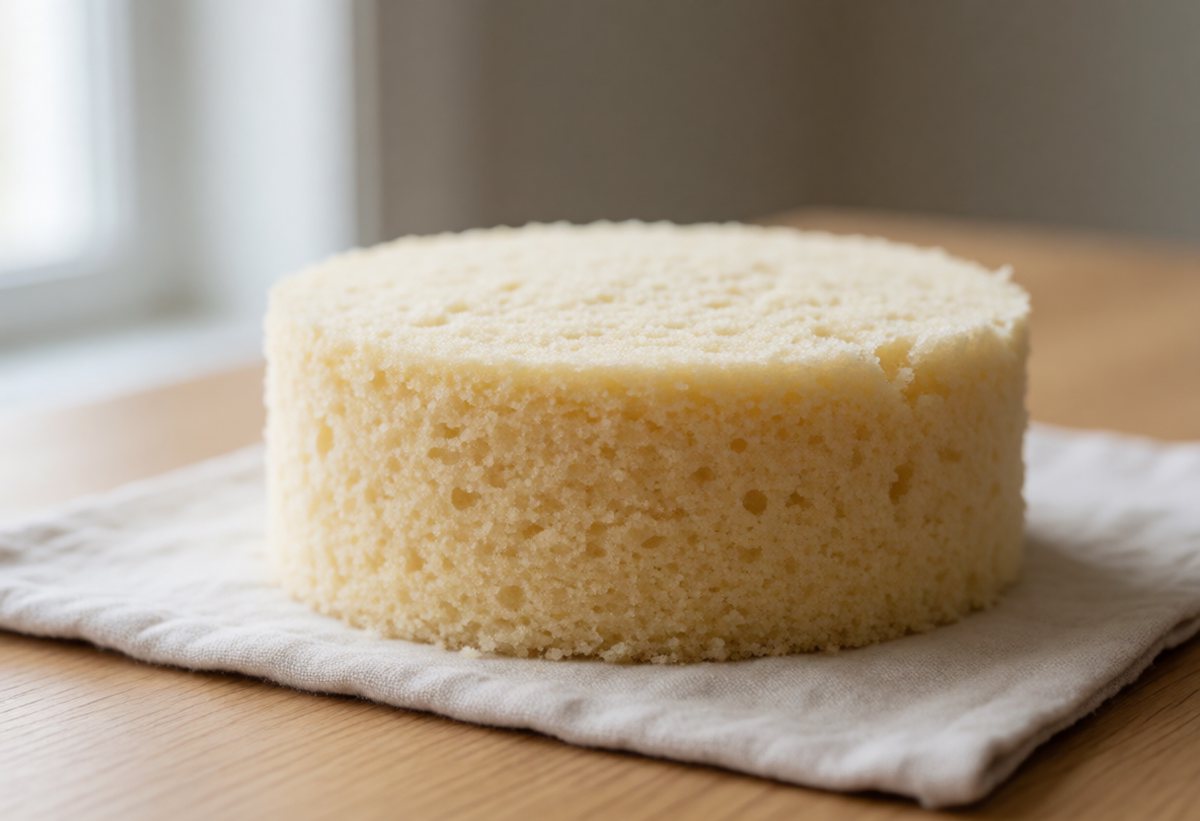
The sponge is the part of the cake that has to hold up the filling and still be tender. This one has no baking powder and no butter: all the lift comes from air whisked into the eggs. The most common failure is a sunken, rubbery layer, and the cause is nearly always the same: the foam was knocked out when the flour went in.
Ingredients and what each one does
- Eggs are both structure and leavening. Whisked, they trap air; the yolk makes the foam steadier and adds flavour.
- Sugar does more than sweeten. It dissolves into the eggs, makes the foam thick and fine-grained, and holds moisture in the crumb.
- Flour is the frame. Its starch sets in the oven and its gluten gives spring, so the more you stir it, the tougher the layer.
- Vanilla is flavour only.
How to make it
- Use eggs at room temperature (roughly 20–25 °C); they gain volume more easily. Whisk with the sugar until thick, pale and ribbon-like: when you lift the whisk, the batter should leave a trail that stays on the surface for a few seconds. That usually takes 8–12 minutes, but go by the ribbon, not the clock.
- Sift the flour (this only breaks up lumps; it isn’t mandatory) and fold it in two or three additions with a wide spatula, cutting down the middle and sweeping up the side. The goal is to remove dry flour, not to make the batter perfectly smooth. Every extra stroke lets air out and builds gluten.
- Line the base of the tin with parchment and leave the sides ungreased so the batter can grip and climb. Fill no more than two-thirds.
- Bake 25–30 minutes at 170 °C fan. Keep the door shut for the first 20 minutes: a sudden drop in temperature stops the rise and the middle sinks.
- It’s done when a skewer comes out clean and the top springs back under a light press. Leave it 5–10 minutes in the tin, then turn out.
- Cool on a rack. Don’t wrap it warm, because steam condenses and makes the crust sticky. A few hours in the fridge before cutting helps: a chilled layer slices cleanly, especially with a wire.
What can go wrong
- Sunk in the middle. The foam was deflated while folding, the oven door was opened early, or the centre was underbaked. No amount of baking powder fixes technique.
- Dense, rubbery crumb. The flour was overmixed and the gluten developed. Fold briefly.
- Dome with a crack. The oven was too hot, so the top set before the centre finished rising. Lower it by 10–20 °C.
- Dry crust and dry crumb. Overbaked. A fat-free sponge dries quickly, so take it out as soon as it’s done.
Substitutions
Swapping part of the flour for potato or corn starch gives a softer, finer crumb because there is less gluten; try it and compare in your own oven. Don’t cut the sugar by much: it’s what keeps the foam stable.
Storage
Wrapped, a day at room temperature, 3–4 days in the fridge, up to a month frozen. A whisked sponge is naturally on the dry side, which is why it’s nearly always brushed with syrup or paired with a moist filling.