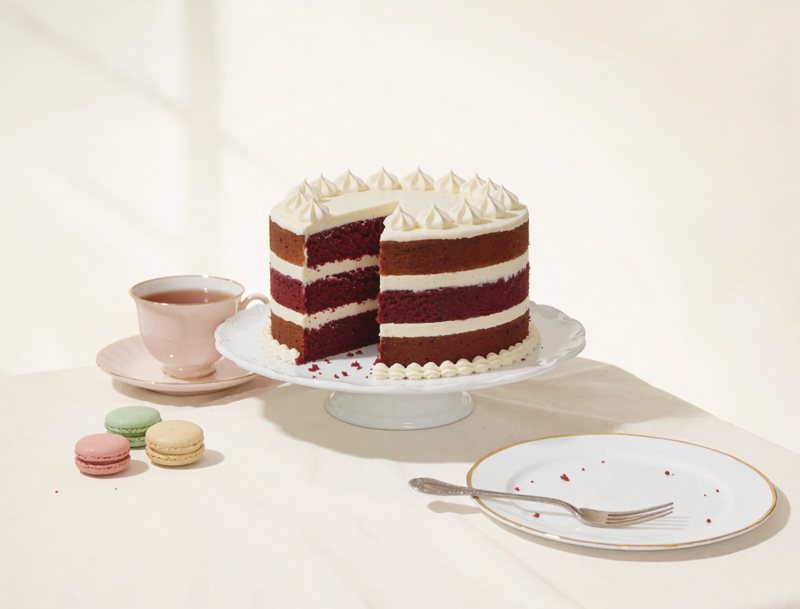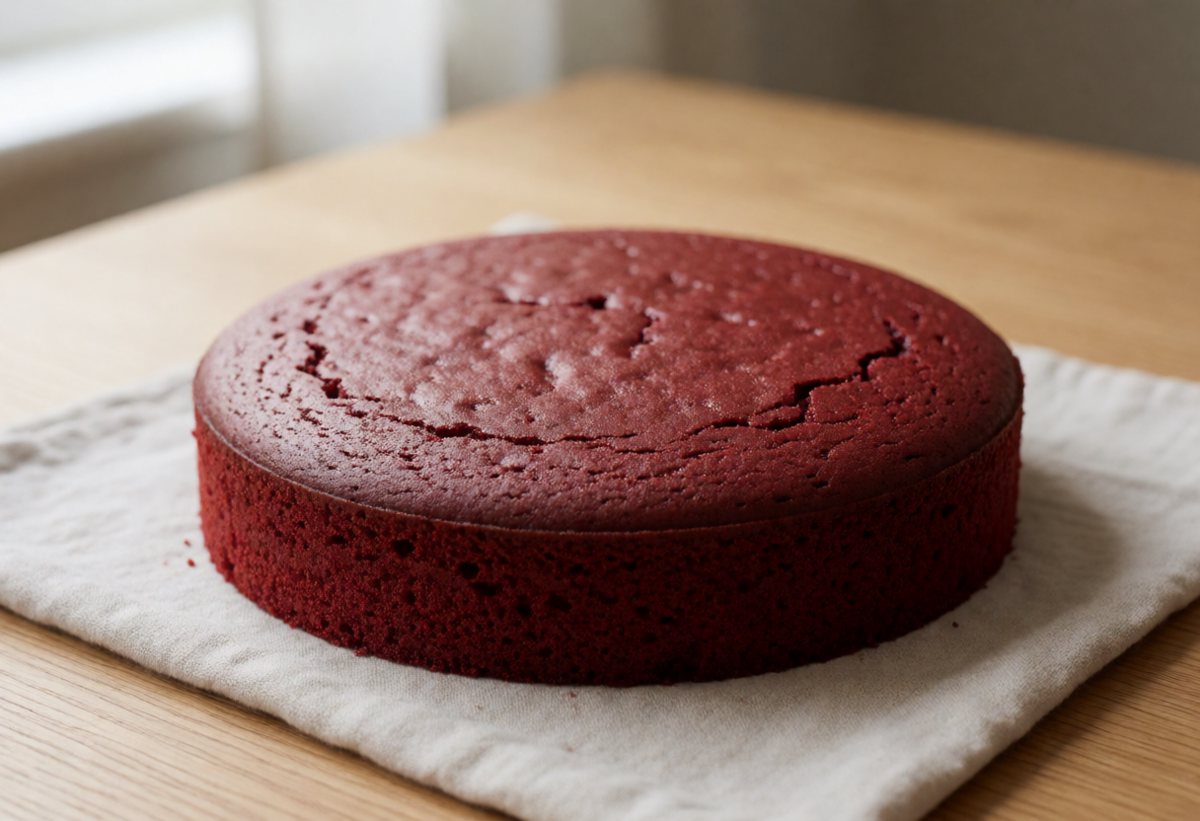
Red velvet is a moist, fine-crumbed sponge with a faint chocolate note and a bright red colour. Its secret isn’t the cocoa; it’s the acidic dairy and the oil. The usual problems are a colour that bakes out to brown and a dry crumb. The causes are different and both are fixable.
Ingredients and what each one does
- Flour is the frame. It isn’t mixed long, so the crumb stays tender.
- Sugar sweetens and holds moisture.
- Oil is moisture that stays soft when cold, so the sponge is tender straight from the fridge.
- Eggs bind and give structure.
- Buttermilk supplies acid. It softens gluten for a tender crumb and reacts with baking soda to lift the batter. The acid also helps the colouring keep its brightness.
- Cocoa only a little, for a hint of depth. This isn’t a chocolate cake.
- Outside the table: red colouring (gel is best; you need less and it doesn’t thin the batter), baking soda and a little vinegar.
How to make it
- Mix the dry ingredients (flour, cocoa, salt, soda) in one bowl and the wet ones (oil, eggs, buttermilk, sugar, vanilla, colouring) in another.
- Combine quickly, only until the dry flour disappears: 10–15 seconds with a whisk or spatula. Lumps don’t matter, but long mixing builds gluten and makes the sponge dense.
- Stir in the vinegar last, mix once and put the tins in the oven straight away. The reaction with the soda starts at once, and the gas should be released in the oven, not in the bowl.
- Line the tins with parchment and fill no more than two-thirds. Bake about 30 minutes at 170 °C fan. It’s done with a clean skewer and a springy top.
- Leave in the tin 10–15 minutes, then turn out onto a rack. Don’t wrap it warm.
What can go wrong
- Brown, not red. Too little colouring, or a thin liquid one. Liquid colours fade in the heat; gel holds up better. Overbaking also darkens it.
- Dry. Overbaked, or too much flour. Oil helps, but it can’t save extra minutes in the oven.
- Bitter aftertaste. Too much colouring or soda.
- Dense. Mixed too long after the flour went in.
Substitutions
Buttermilk can be replaced with kefir, or milk with lemon juice or vinegar: the acid matters, or the sponge turns firmer. You can skip the colouring and get a darkish sponge; the colour in this cake is purely visual.
Storage
Two days wrapped at room temperature, up to 5 days in the fridge. An oil sponge stays soft even when cold.