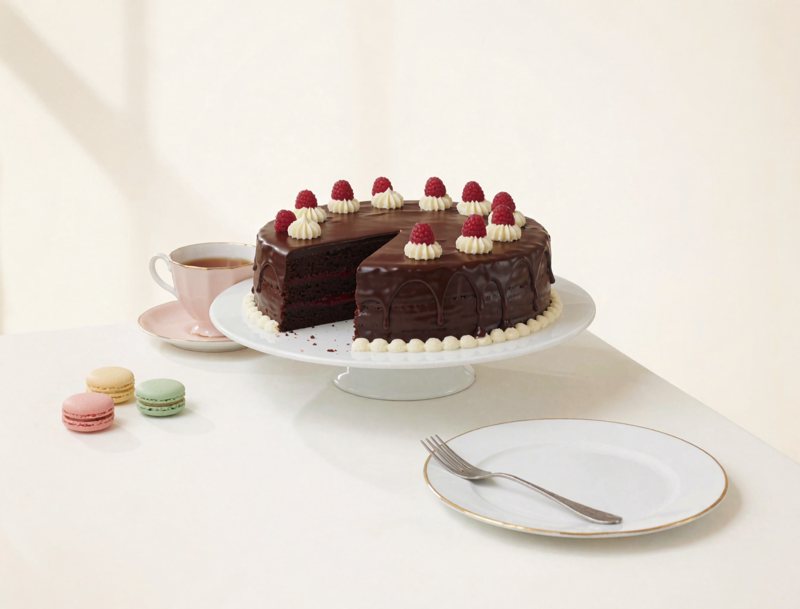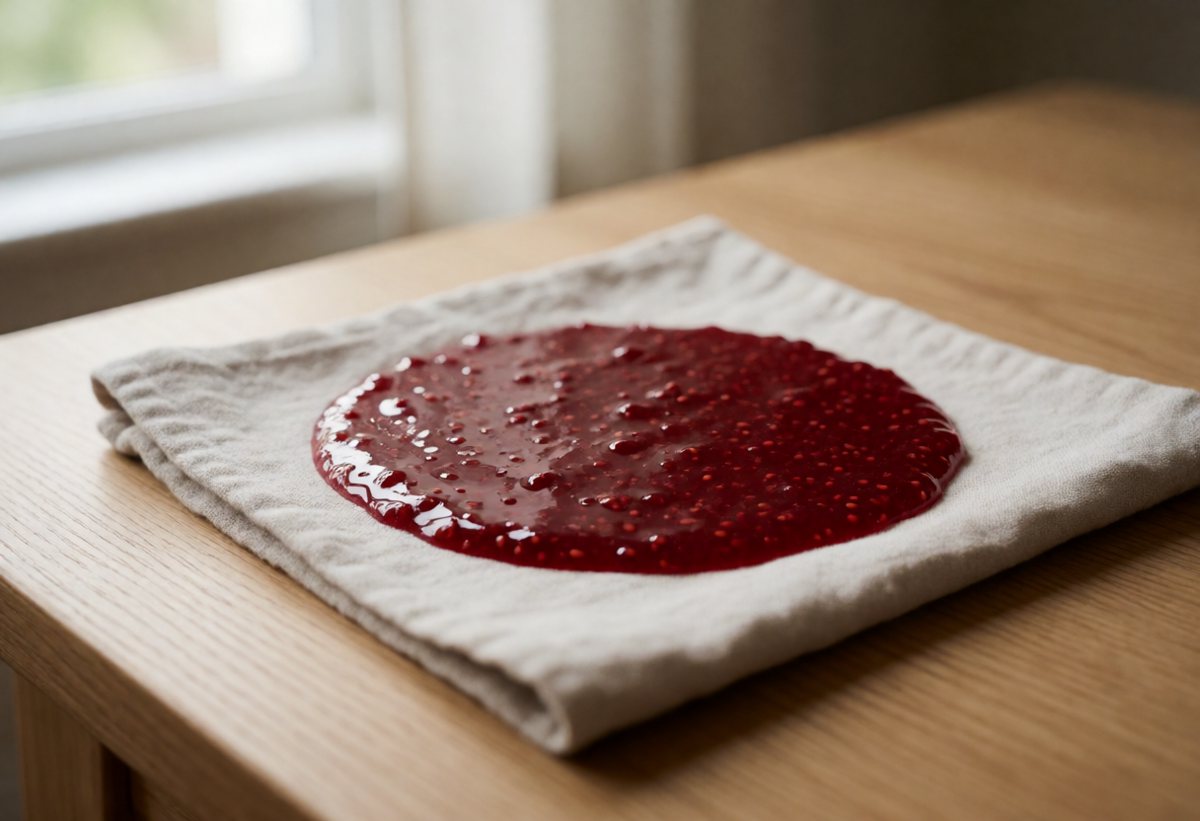
Raspberry jam is a thin, tangy layer between sponges. The usual trouble is that it runs and soaks into the cake. The cause is a jam that was undercooked or spread while warm: it keeps thickening in the cold, and warm jam seeps into the crumb.
Ingredients and what each one does
- Raspberries, fresh or frozen, give flavour, acid and natural pectin.
- Sugar ties up the water, so the jam thickens and keeps. Without enough of it, it will not set.
How to make it
- Put the raspberries and sugar in a pan and leave 10 to 15 minutes for the juice to run.
- Bring to the boil over medium heat, stirring now and then so it does not catch.
- Boil for about 10 minutes until thick. Sign: a drop on a cold saucer does not spread, and a line drawn through it with a finger holds.
- For a smooth layer, push it through a sieve to remove the seeds. For a rustic layer, leave the fruit as it is.
- Cool completely before spreading. Warm jam soaks into the sponge, and cold jam is thicker.
What can go wrong
- Runny. Undercooked. Return it to the heat and repeat the saucer test.
- Too stiff, like fruit paste. Overcooked.
- Soaked into the sponge. It was warm or the layer was too thick. Spread it thin and cold.
- Too sharp. Raspberries are sour. Add a little more sugar.
Substitutions
Other berries (blackcurrant, cherry) work the same way, and berries rich in pectin set faster. Pectin or gelatine can rescue a jam that stays thin, but gives a more jelly-like texture.
Storage
In a jar in the fridge for up to 2 weeks. Inside a cake the moisture moves into the sponge within a day, so a thin ring of cream around the jam keeps it where you put it.