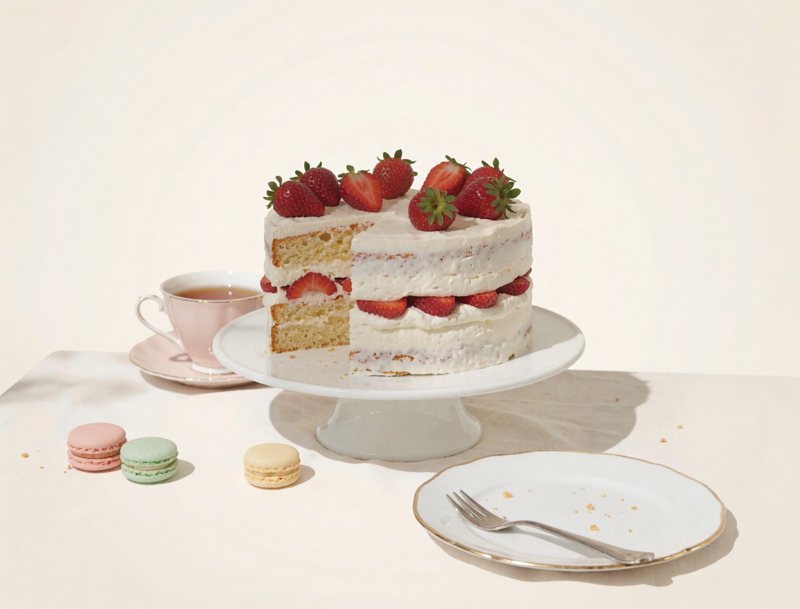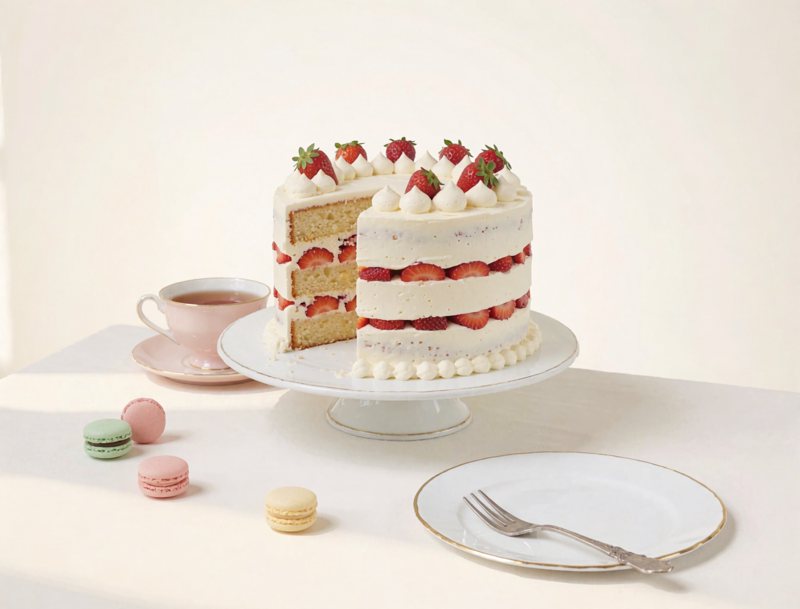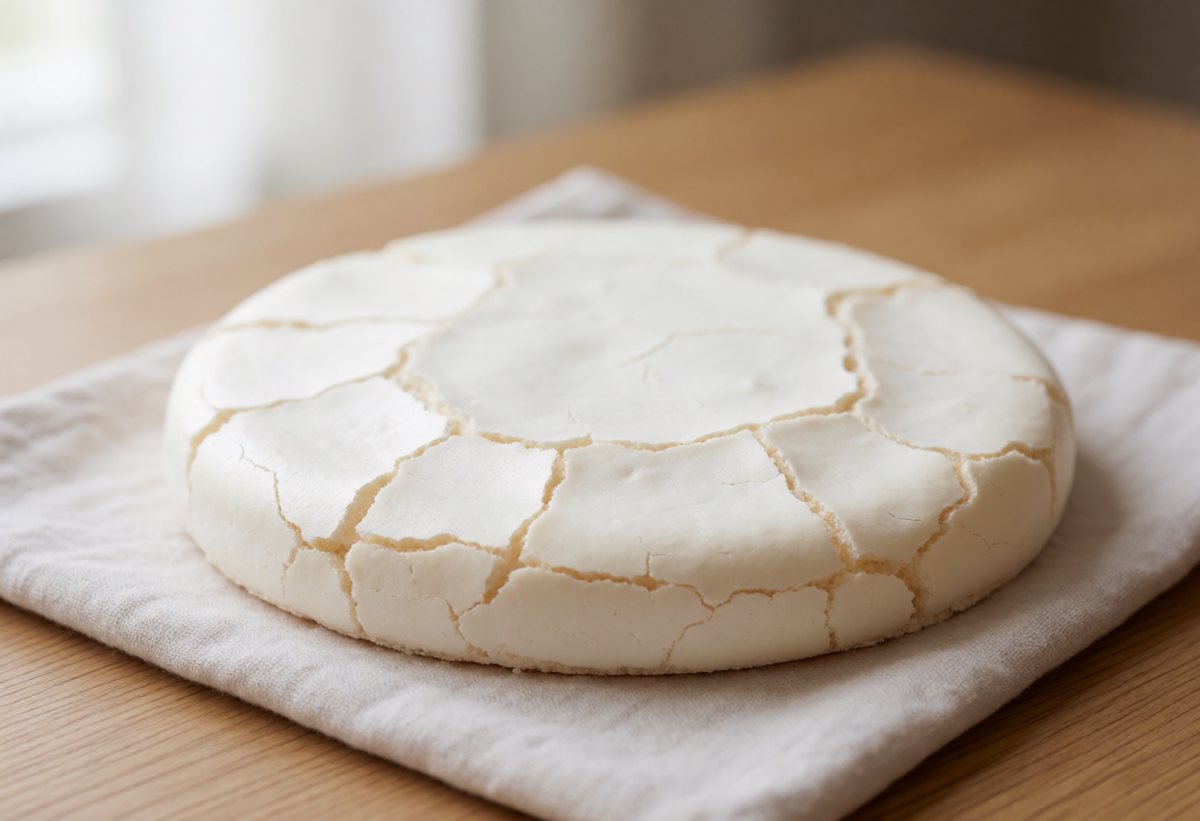
A meringue layer is egg white foam and sugar dried in the oven: crisp outside, soft and chewy inside. The main problems are sticky meringue, meringue that weeps syrup, or meringue that collapses. Nearly always the cause is sugar that wasn’t dissolved or a layer that wasn’t dried enough.
Ingredients and what each one does
- Egg whites make the foam. Fresh whites take longer to whip but give a steadier foam.
- Sugar, about as much as the whites by weight, stabilises the foam and itself sets into a crisp frame. With less sugar the meringue weeps and collapses. Use fine sugar, not icing sugar, because the starch in icing sugar interferes with whipping.
- Cornflour, a little, folded in at the end. It binds moisture and keeps the middle tender.
How to make it
- Use a glass or metal bowl, not plastic, which holds a greasy film. Wipe it with vinegar or lemon: any fat, even a drop of yolk, stops the foam from rising.
- Start with room-temperature whites (about 21 °C) and a pinch of salt on low speed until foamy.
- Add the sugar in small portions while whipping at medium-high speed. The goal is stiff, glossy peaks and fully dissolved crystals: rub a drop between your fingers. With a hand mixer this takes 15–20 minutes. Undissolved sugar bakes into brown droplets.
- Fold in the cornflour at the end with a spatula.
- Spread or pipe onto parchment into the shape you need. For a cake the layer is 1.5–3.5 cm thick.
- Dry for about 90 minutes at 100 °C. For a snow-white colour, don’t go above 100 °C. It’s ready when it lifts easily from the parchment and sounds dry when tapped.
- Switch the oven off and let the meringue cool inside, door ajar: a sudden change causes cracks. Once fully cool, store it somewhere dry.
What can go wrong
- Sticky, chewy all through. Underdried, or the sugar hadn’t dissolved.
- Weeps syrup. Too little sugar, or the foam wasn’t whipped enough.
- Yellow or brown. The oven was too hot.
- Cracks. Rapid temperature change or too fast drying.
- Won’t whip. Grease in the bowl or yolk in the whites.
Substitutions
Lemon juice suits fresh whites and vinegar older ones; the acid steadies the foam. An overwhipped meringue can be rescued with one more egg white.
Storage
Keep baked meringue in a dry airtight container. It takes up moisture quickly from air and cream, so assemble the cake close to serving, and insulate the layer with a coat of ganache or cream.