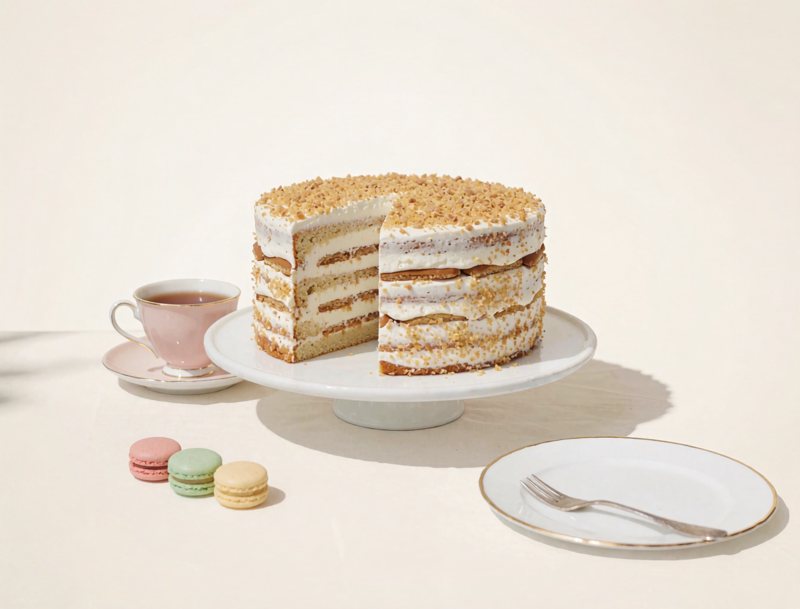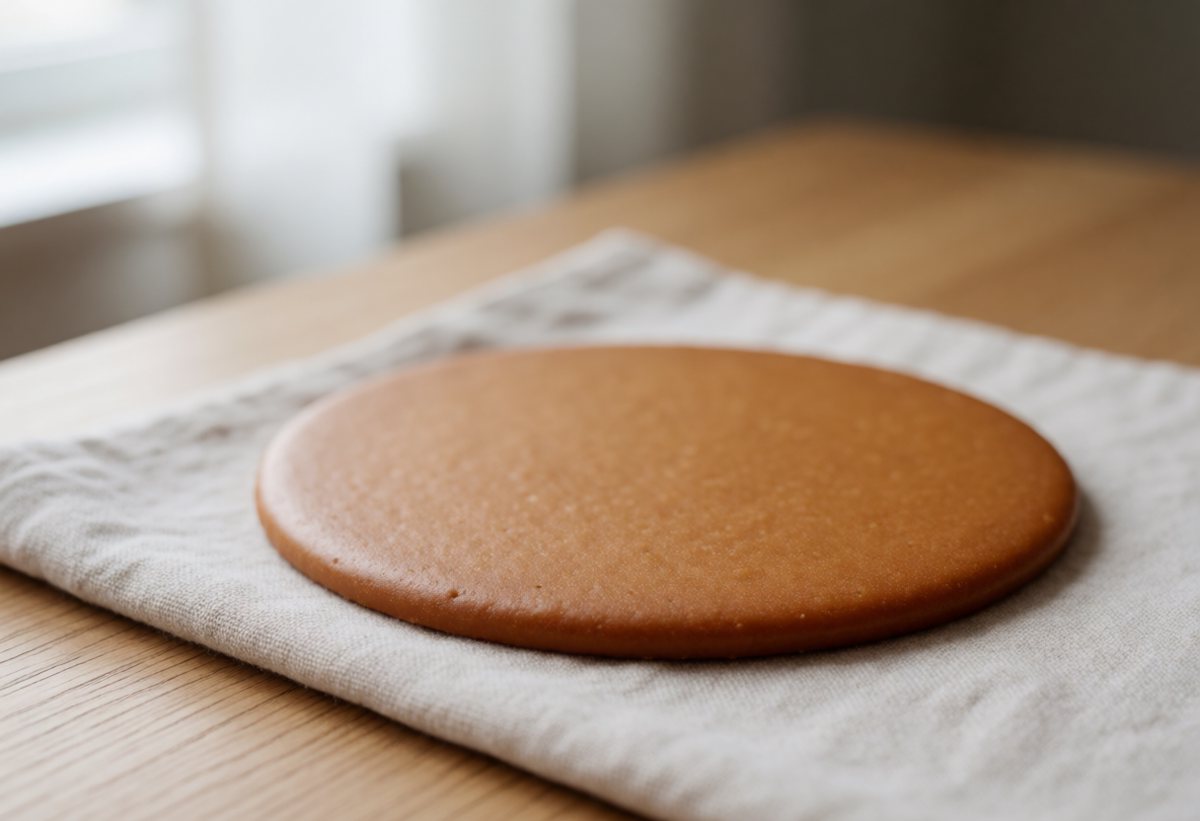
Honey cake layers are thin, quick-baking discs that soften only after they sit with the cream, so a cake needs several of them. The common worry is that they come out hard as biscuits. That’s not a mistake: a freshly baked honey layer should be crisp-dry, and it’s the cake, resting in the cold, that makes it tender.
Ingredients and what each one does
- Honey gives flavour, colour and moisture retention. It is hygroscopic, meaning it pulls in water, which is why the layers later soak up the cream so well. Its sugars (glucose, fructose) also brown quickly, giving the dark crust.
- Sugar adds caramel flavour and a firmer crust.
- Butter makes the dough pliable and tender; fat limits gluten, so the dough rolls out easily.
- Eggs bind the dough.
- Flour is the base. There is a lot of it because the dough is rolled, not poured. Many recipes also add baking soda, which reacts with the mildly acidic honey for colour and a little lift; for a thin layer it’s optional.
How to make it
- Warm the honey, sugar and butter together in a water bath until the sugar dissolves and the mix is smooth. Don’t boil: overheated honey tastes bitter.
- Cool slightly so the eggs don’t scramble, then mix them in. Keep the mixture warm rather than hot.
- Add the flour and bring it into a soft dough. It’s sticky, and this is where it’s tempting to keep adding flour, which makes the layers tough. Let the dough rest and cool; it becomes much easier to handle.
- Divide it and roll each piece directly on parchment to about 2–3 mm. Thin layers bake through fast and soak up cream evenly.
- Bake 5–6 minutes at 180 °C. The sign is an even golden-brown. While hot the layer is flexible and can be trimmed with a template; as it cools it hardens and snaps.
- Bake the trimmings too: crumbled, they coat the outside of the cake.
What can go wrong
- Bitter layers. Overheated honey or overbaked: from golden to burnt is only a few minutes.
- Stays hard after assembly. Too thick, or the cake hasn’t rested. The fix is time in the fridge, commonly 8–12 hours (a rule of thumb, not a law).
- Dough too sticky. It hasn’t cooled; chill it rather than adding flour.
- Blisters. Thick spots in the rolled dough; prick with a fork.
Substitutions
Part of the honey can be replaced with maple or invert syrup, with weaker colour and aroma. Wholemeal flour makes the dough heavier and the thin layers coarser.
Storage
Baked layers keep 2–3 days in an airtight container. An assembled cake needs the cold and the time to soften.