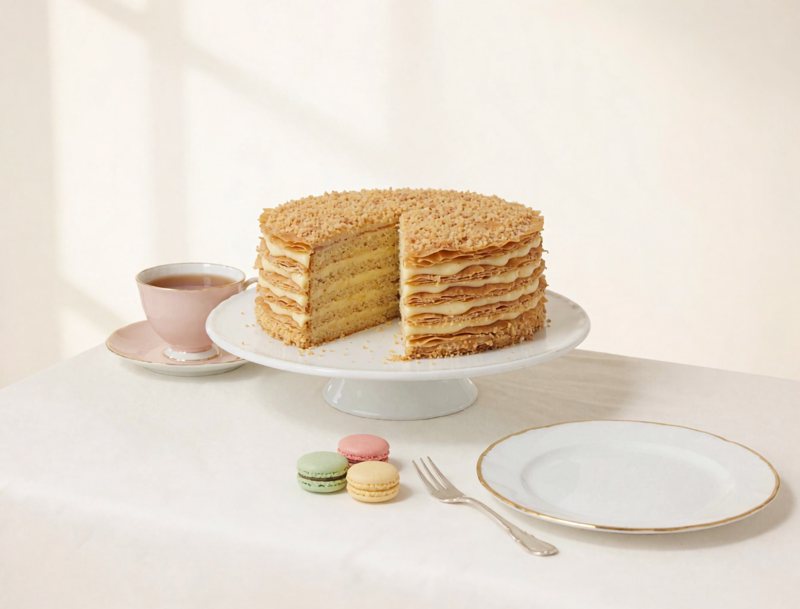
Pastry cream holds its shape between layers of a Napoleon and fills eclairs. The usual failure is lumps or a taste of raw flour. Lumps appear when the yolks cook on their own instead of in the liquid, and the raw taste comes from undercooked starch.
Ingredients and what each one does
- Milk is the base and the liquid. Whole milk gives a richer taste.
- Egg yolks give colour, flavour and a tender texture. They set at around 70 °C.
- Sugar sweetens and protects the yolks from setting too abruptly.
- Cornstarch thickens. It swells when heated to roughly 85 to 90 °C, and that is when the cream thickens.
- Butter at the end adds shine and softness.
How to make it
- Heat the milk until steaming, not boiling. Separately whisk the yolks with the sugar and starch into a smooth paste. Mixing the starch with dry sugar first keeps it from clumping.
- Pour the hot milk onto the yolks in a thin stream, whisking all the time. Yolks warmed gradually do not scramble.
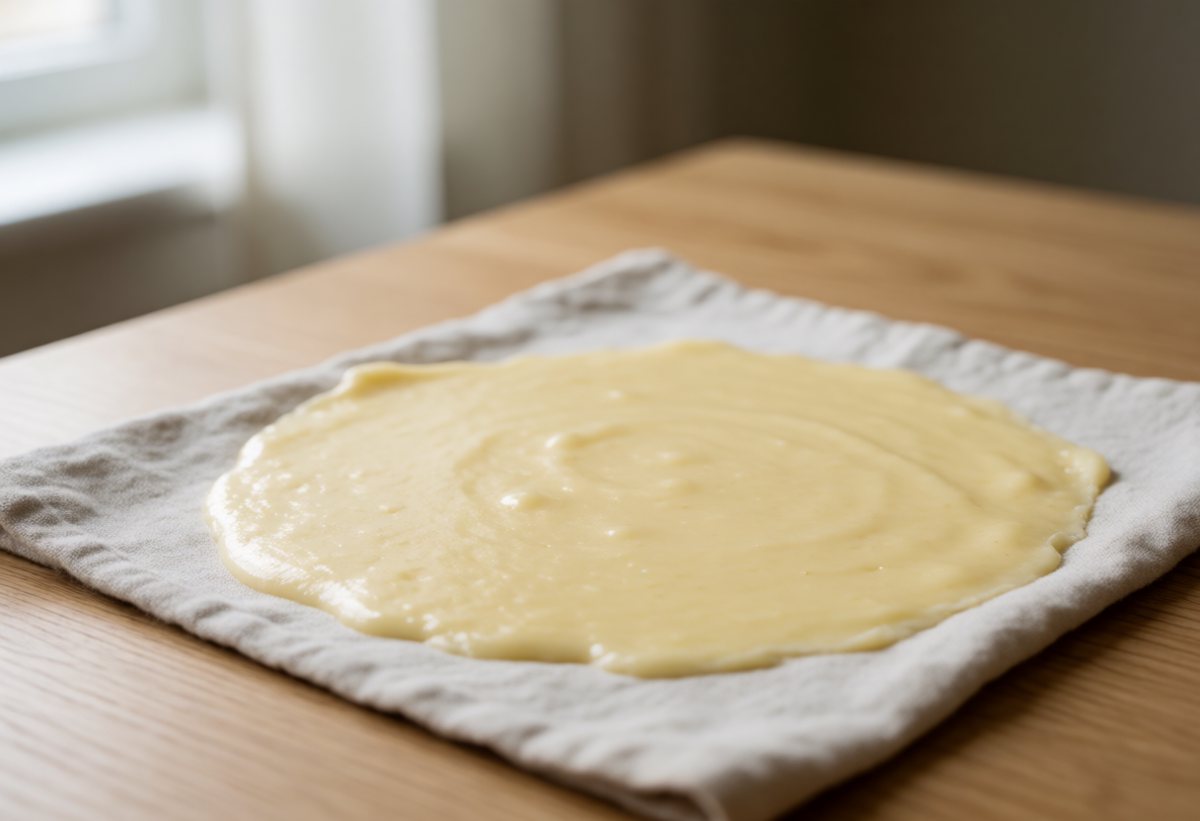
- Return the mixture to the pan over medium heat and whisk continuously, especially at the bottom. It thickens suddenly after 1 to 2 minutes. Sign: slow bubbles break the surface and the cream holds a line from the whisk.
- Cook another minute, still whisking. This is for the starch: undercooked, it tastes raw and later thins out.
- Off the heat, stir in the butter until melted.
- Cover at once with film touching the surface so no skin forms. Cool in the fridge or over an ice bath.
- Whisk briefly before use to smooth it.
What can go wrong
- Lumps. The yolks scrambled from sudden heat or incomplete whisking. Strain through a sieve to rescue it.
- Thin after cooling. The starch was undercooked, or the cream was too acidic (lemon, berries).
- Skin on top. It cooled uncovered.
Substitutions
Whole eggs instead of yolks give a paler colour and a less rich taste. Flour instead of cornstarch works but needs longer cooking.
Storage
Under film in the fridge for 2 to 3 days. Do not freeze: it separates when thawed.