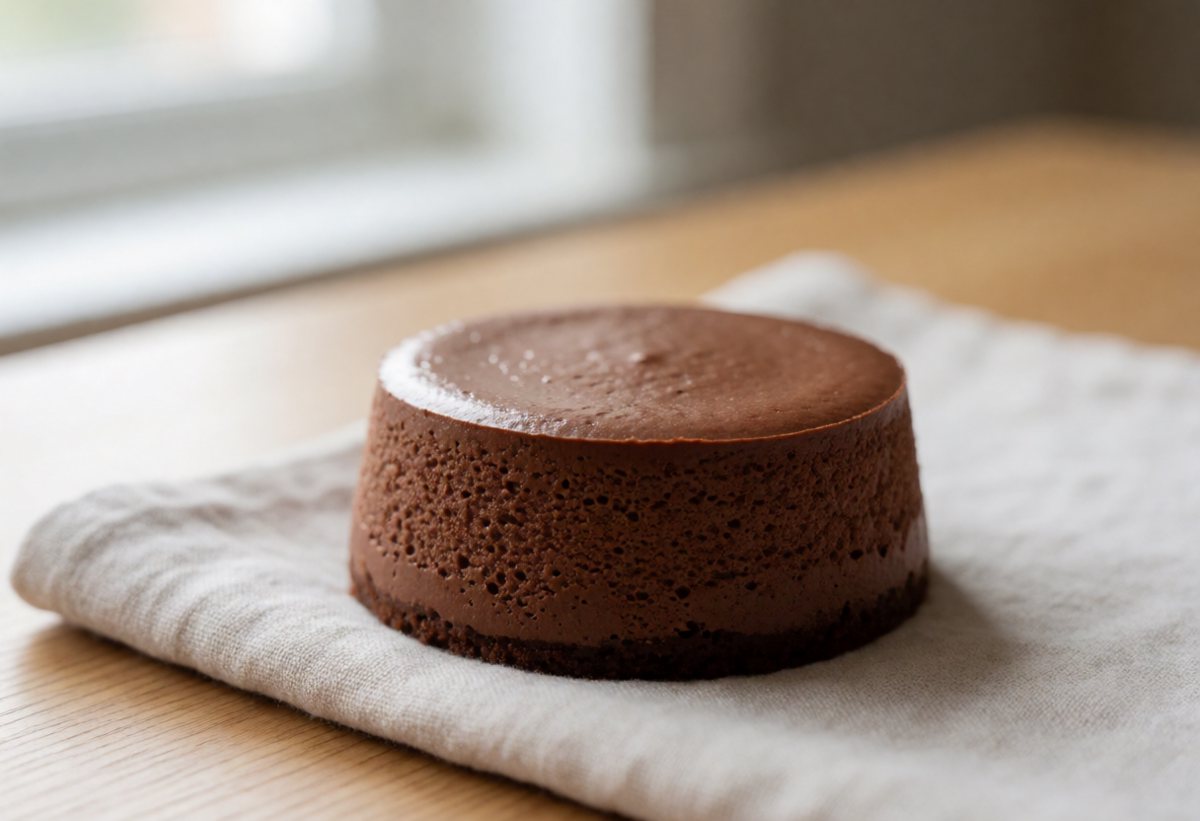
Chocolate mousse is an airy layer that depends entirely on mixing correctly. The usual failures are chocolate lumps in the foam, or a mousse that sinks and stays runny. The cause is a temperature gap, not the chocolate brand.
Ingredients and what each one does
- Dark chocolate gives flavour and structure. Its cocoa butter sets in the cold and holds the mousse.
- Heavy cream (33 to 35% fat) whips into the foam that makes it light.
- Eggs (yolks) add silkiness and extra stability. They are usually cooked over a water bath with the sugar to remove the raw-egg risk.
- Sugar sweetens and helps the yolks thicken.
How to make it
- Melt the chocolate over a water bath. Add the yolks beaten with the sugar and warmed to thick (about 70 to 75 °C), and stir. Cool the mixture to lukewarm, about 30 to 35 °C.
- Whip the cream separately to soft peaks. Sign: the foam holds its shape but the tip bends. Stiff peaks mix badly and give lumps.
- Stir a third of the cream into the chocolate firmly to loosen it. Fold in the rest from the bottom up, gently, until the streaks disappear.
- Spread it in the mould or tin at once and chill at least 4 hours. The cocoa butter sets in the cold and the mousse takes shape.
What can go wrong
- Chocolate lumps. The chocolate mixture was too cold when it met the cream and set in flecks. Warm it to 30 to 35 °C.
- Foam collapsed, dense mousse. The cream was stirred in too hard or for too long.
- Does not set. Too little chocolate, a chocolate low in cocoa butter, or too short a time in the fridge.
- Greasy or split. The chocolate was overheated or water got into it.
Substitutions
Milk or white chocolate need more chocolate or less cream: they have less cocoa butter and will not set the same way. Gelatine can add stability but gives a more jelly-like texture.
Storage
Two to three days in the fridge, covered. It can be frozen inside an assembled cake, though the texture changes a little.