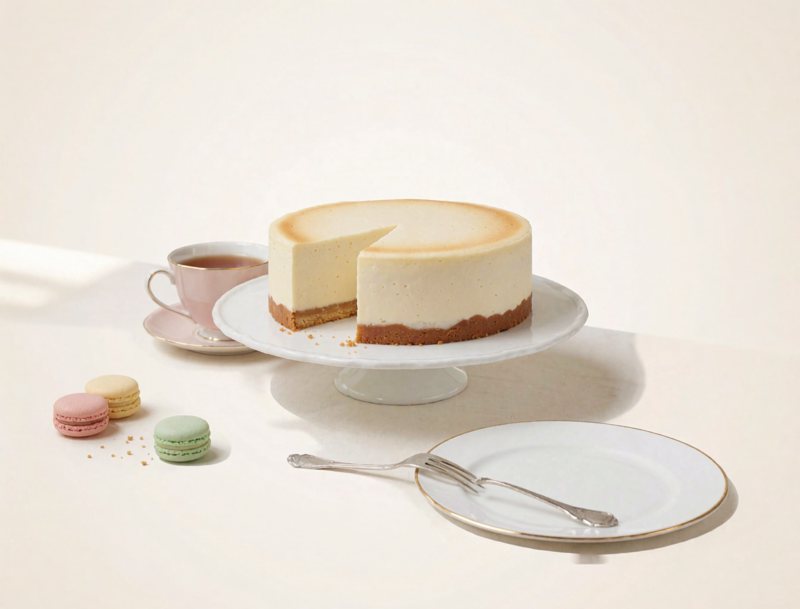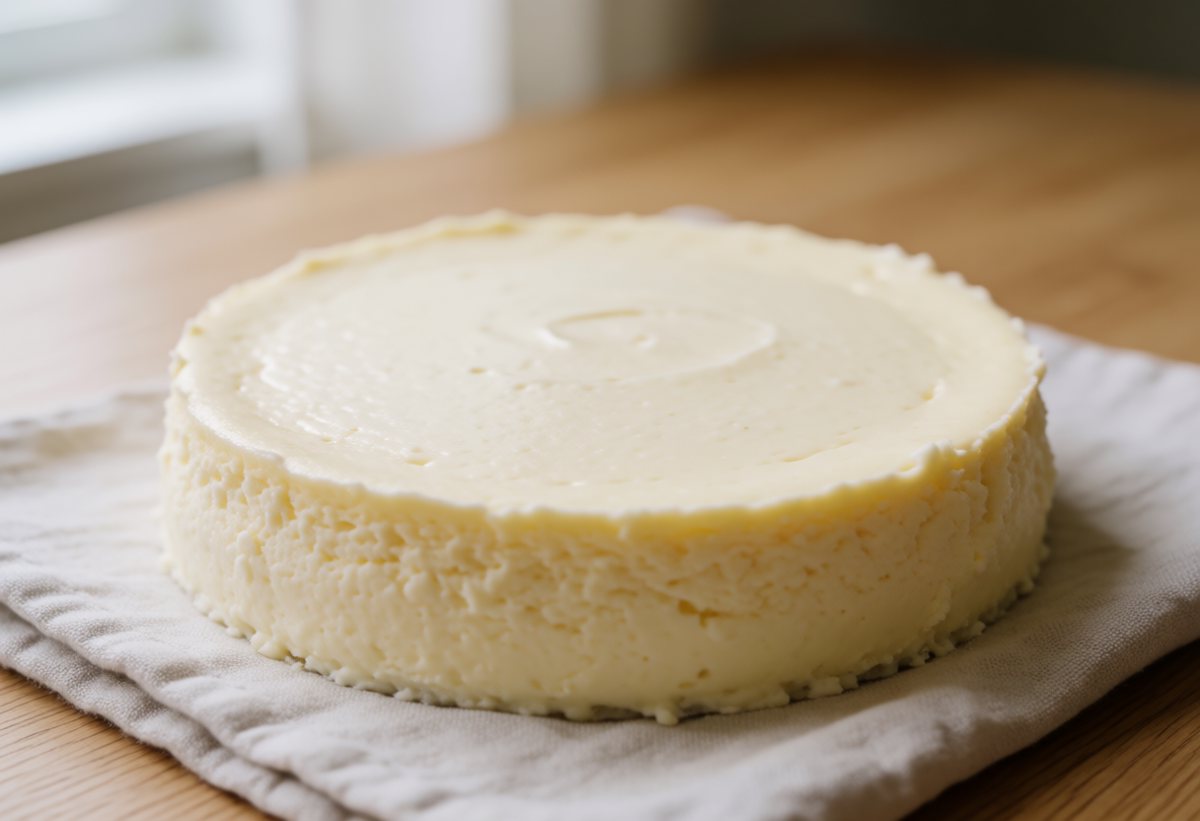
Cheesecake filling is essentially a custard that sets in the oven. The classic failure is cracks and a sunken middle. They come not from the recipe but from overheated egg protein or from cooling the cake too abruptly.
Ingredients and what each one does
- Cream cheese is the bulk and the richness. A cheap one is no worse than an expensive one, as long as it is full-fat and not watery.
- Eggs set when heated and make the filling firm. There are few of them because too many gives a rubbery, springy texture.
- Sugar sweetens and softens the egg protein as it sets.
- Cream loosens the batter and adds tenderness.
How to make it
- All ingredients at room temperature. Cold cheese forms lumps you can never beat out.
- Beat the cheese with the sugar on low speed until smooth. Do not whip it: air expands in the oven and then collapses, leaving cracks.
- Add the eggs one at a time, mixing only until combined. Stir in the cream.
- Wrap the tin in foil underneath and stand it in a dish of hot water that reaches halfway up the tin. This water bath heats gently and evenly and keeps the edge from drying.
- Bake at about 150 °C. Sign: the edge is set and the centre still wobbles like jelly. Time depends on the tin, usually 50 to 70 minutes.
- Switch the oven off, crack the door and leave the cake inside for about an hour. A sudden temperature change contracts the filling and splits it.
- Then cool to room temperature, and chill for at least 6 hours. Slice it fully chilled.
What can go wrong
- Cracks. Overmixed, oven too hot, or cooled too fast.
- Sunk in the centre. Too much air, or underbaked. A centre that ripples like a wave rather than trembles needs more time.
- Water on the surface. The water bath leaked in. Wrap the tin more tightly.
- Grainy texture. Overheated, the eggs curdled.
Substitutions
Lower-fat cheese (under about 20% fat) gives a drier result. Cottage cheese or quark needs sieving and gives a denser, less creamy filling.
Storage
Covered in the fridge for 4 to 5 days. It freezes well.