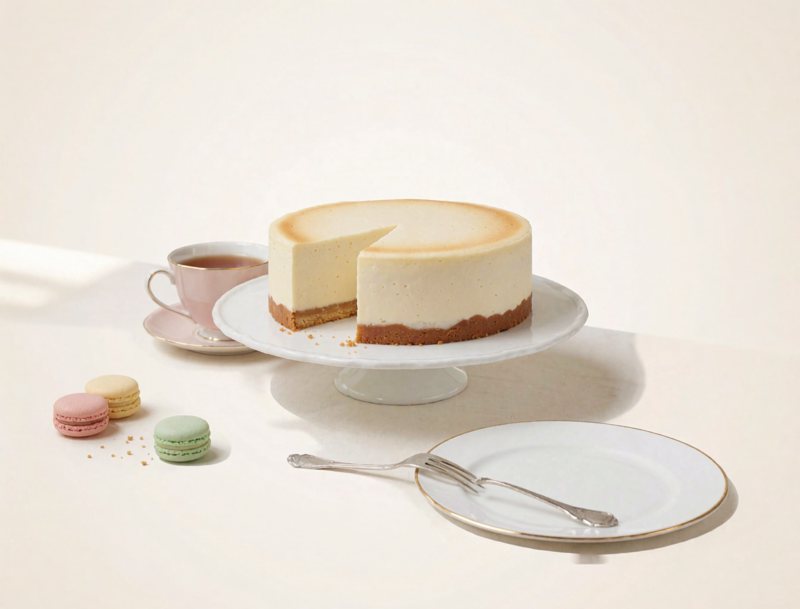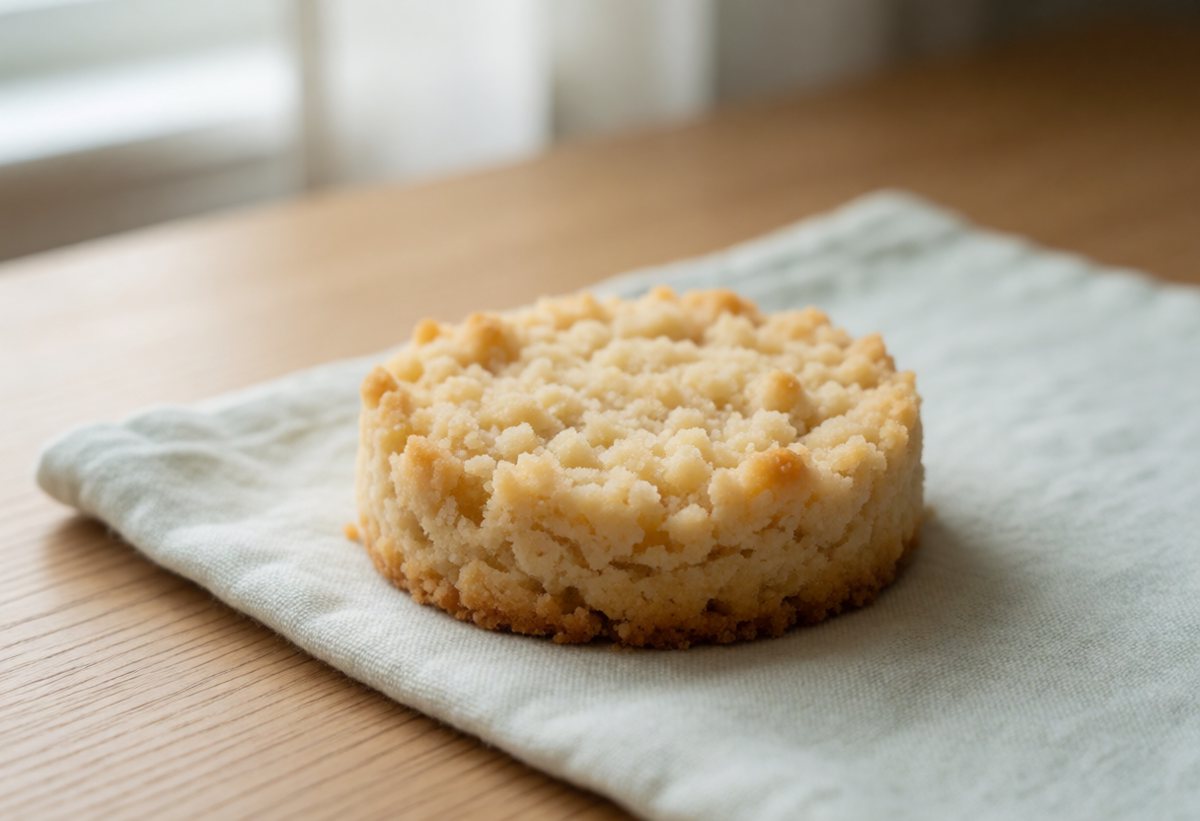
The crust carries a heavy filling and gives a crisp contrast. The usual complaint: it falls apart when you slice, or goes soggy under the filling. The cause is nearly always the ratio of butter to crumbs and uneven pressing.
Ingredients and what each one does
- Biscuits (digestives, graham crackers, shortbread) provide the skeleton. The butter hardens around the crumbs when chilled.
- Butter, melted, glues the crumbs. It soaks between particles and sets in the fridge like mortar.
How to make it
- Crush the biscuits to fine crumbs, in a blender or with a rolling pin in a bag. Coarse pieces leave gaps, and the crust crumbles.
- Melt the butter and let it cool slightly. Hot butter wets the crumbs unevenly.
- Mix until it looks like wet sand. Sign: a handful squeezed in your fist holds its shape.
- Press into a springform tin with the bottom of a glass, packing hard, especially along the wall where crusts break first.
- Chill at least 30 minutes so the butter sets. For a baked cheesecake you can bake it for 8 to 10 minutes at 160 to 170 °C, which firms it and makes a barrier against the filling. Cool it fully before pouring.
What can go wrong
- Crumbles on slicing. Too little butter or too loose pressing.
- So hard you cannot cut it. Too much butter or an overlong pre-bake.
- Soggy underneath. Moisture from the filling got in. Pre-baking and cooling fully help, and so does a dry tin.
Substitutions
Any dry biscuit works, but chocolate ones give a darker, slightly bitter base. Very sweet biscuits give a sticky crust, so go lighter on any added sugar. Ground nuts mixed into the crumbs add crunch.
Storage
The crust alone keeps a day in the fridge. The finished cheesecake keeps 4 to 5 days with it.